Soybean inoculation and co-inoculation: the precautions that make a difference in nodulation
Inoculating every year and adding Azospirillum to Bradyrhizobium increases yield, but it only works if the bacteria reach the seed alive.
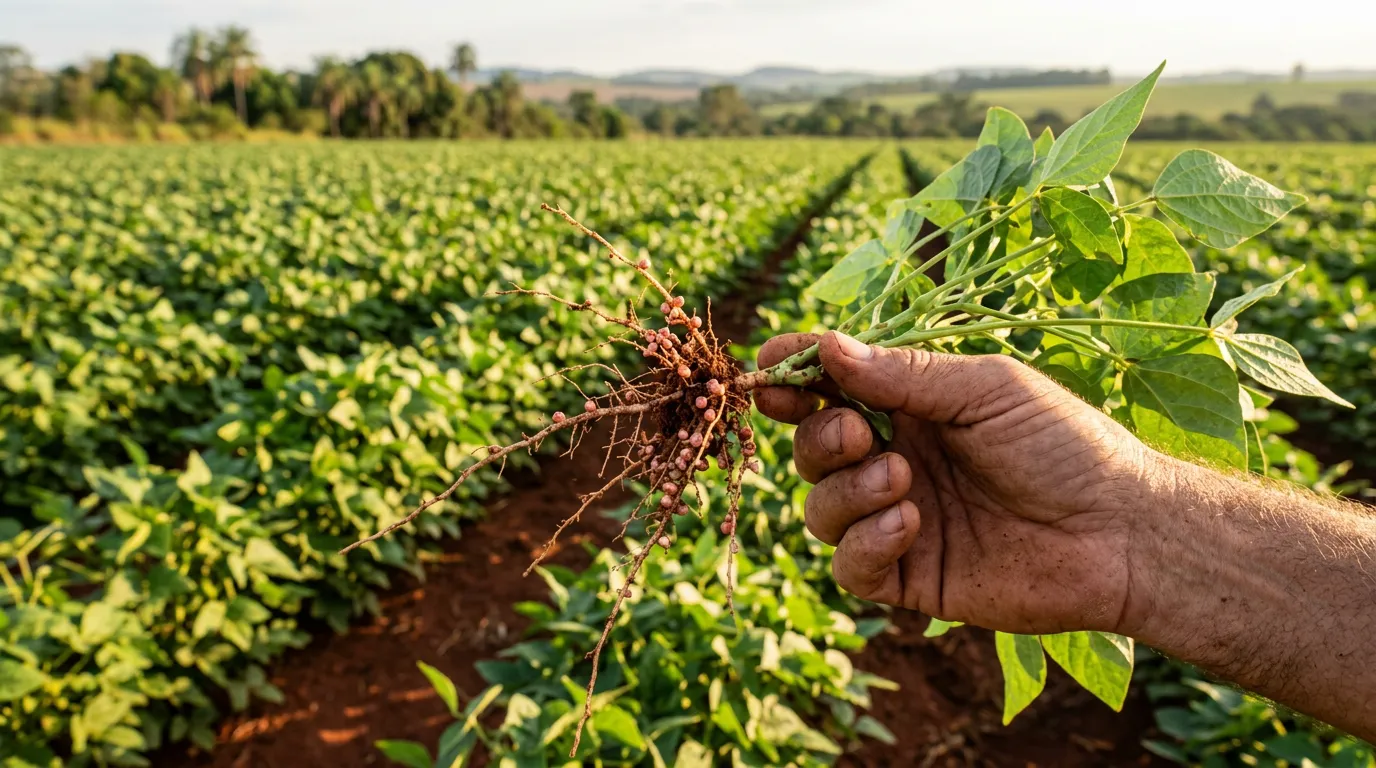
Brazilian soybeans can do without nitrogen fertilizer thanks to a partnership with bacteria. Bradyrhizobium forms nodules on the roots and turns nitrogen from the air into food for the plant. It is the cheapest technology in the field, and also one of the easiest to lose through carelessness at application time.
Why inoculate every year
Even in areas where soybeans have been planted many times, reinoculation pays off. In an Embrapa study, inoculating again every season brought an average 8.4% increase in grain yield compared with areas that were not inoculated annually.
What co-inoculation adds
Co-inoculation means applying a second bacterium together with Bradyrhizobium: Azospirillum brasilense. It stimulates root growth, which gives nodules more places to form. Embrapa has recommended co-inoculation since the 2013/14 season and reports more abundant and earlier nodulation. In trials published by Embrapa, co-inoculation yielded on average 7.7% more than inoculation with Bradyrhizobium alone.
The precautions that keep the bacteria alive
An inoculant is a living product. Sun, heat and some chemicals kill the bacteria before they reach the soil. The precautions recommended by Embrapa:
- Inoculate in the shade and let the seeds dry in the shade as well.
- Plant on the same day. Inoculated seed sitting in the shed loses bacteria every hour.
- Protect the seed from sun and heat during transport and in the planter box.
- Do not put the inoculant directly into the planter box and do not make a "tank soup" mixing inoculant with agrochemicals.
- Use the full rate shown on the label. Use a reduced rate only if applying the full one is impossible.
- Be careful with chemical seed treatment. Fungicides and insecticides can reduce bacterial survival. When chemical treatment is necessary, one option is to apply the inoculant in-furrow.
In-furrow inoculation
Embrapa accepts in-furrow application of Bradyrhizobium and Azospirillum as an alternative to seed treatment. It avoids direct contact with seed chemicals and simplifies logistics on large areas, but it requires a well-calibrated spray volume to distribute the bacteria along the row.
In practice
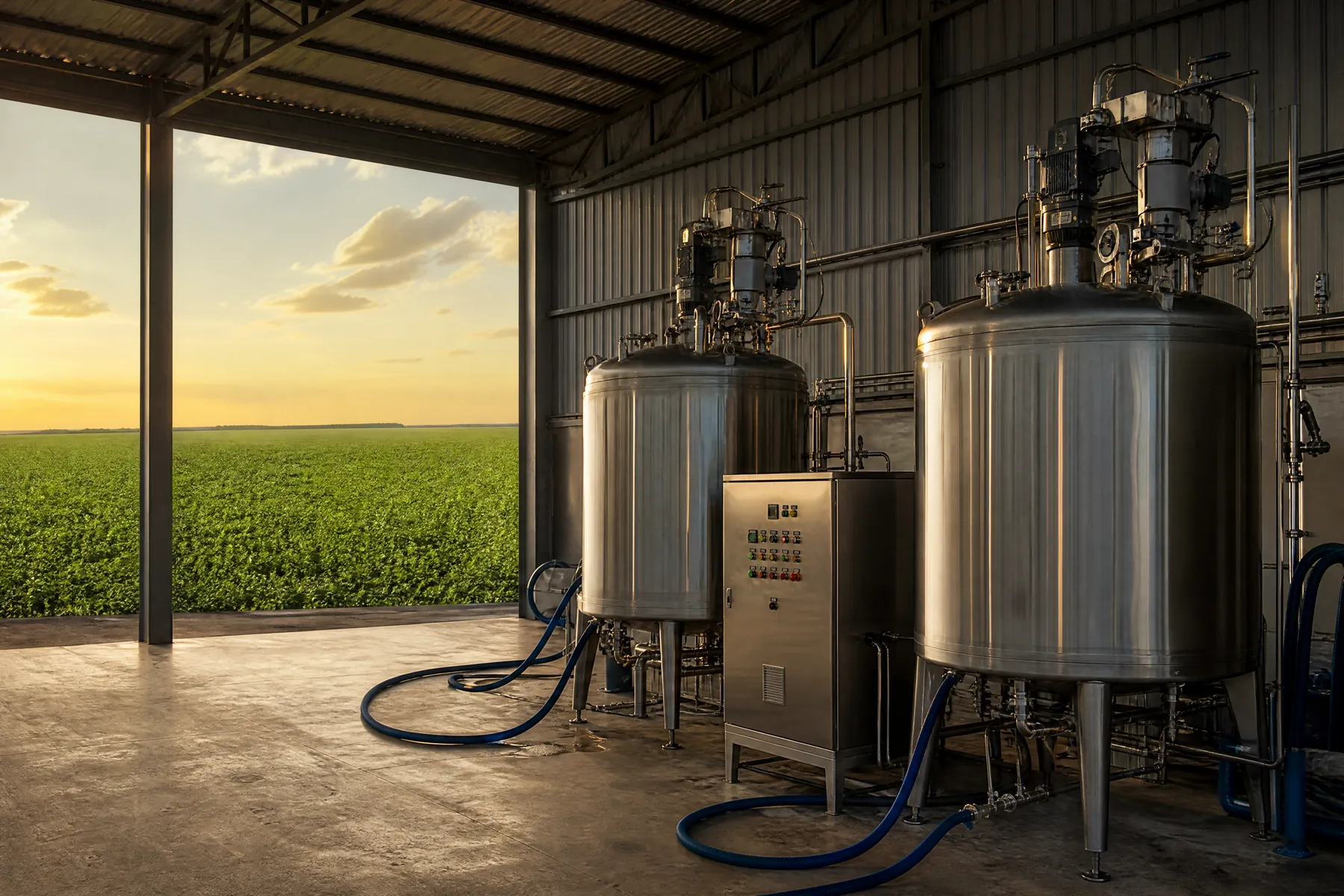
NoduleFarm Soja contains Bradyrhizobium japonicum and B. elkanii, registered with MAPA, and Blend Zea provides Azospirillum to complete the co-inoculation. Growers who produce on the farm can multiply the same microorganisms with the BradyFarm and AzosFarm kits.
To understand the whole problem, see the page on nodulation and nitrogen fixation.
The technical team will recommend the product and management for your case.