
On Farm System
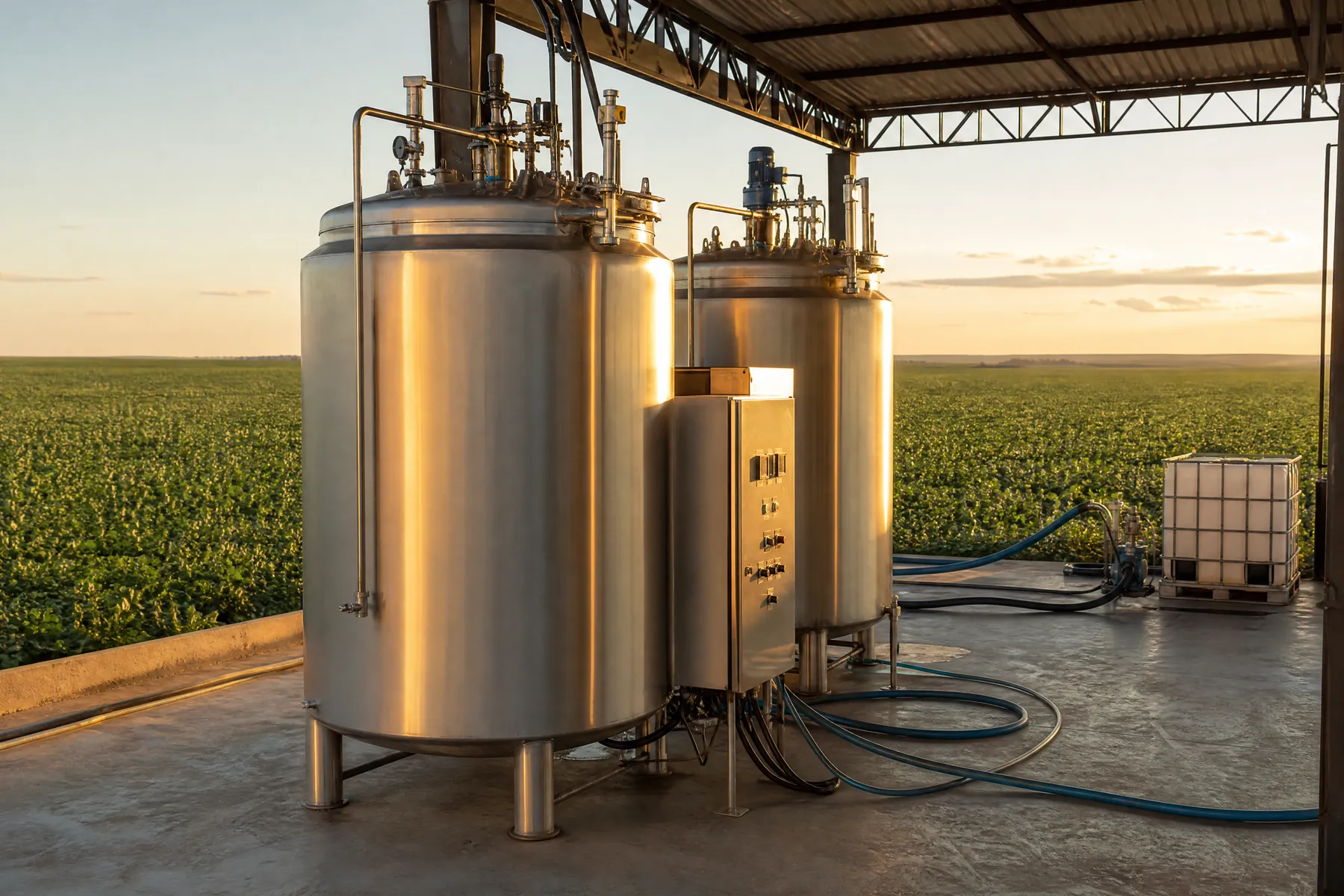
Bioreactor, microorganism kits, training and support to produce biologicals on the farm, with the cost per hectare clearly worked out.
- We ship products throughout Brazil
- Pickup at our headquarters in Sinop, MT
- Bank of 17 microorganism strains
- 22 kits to produce biologicals on the farm
- In-house laboratory and plant
- Quality control on every batch
- Technical team alongside the grower
Three starting points
The system adapts to what the farm already has.
I want to produce
Complete implementation: bioreactor sized for your area, kits, team training and 12 months of technical support.
I already produce
For those who already have a bioreactor: kits with inoculum, culture medium and preparation inputs, ready for each 1,000 L batch.
Not yet
To get started without infrastructure, the ready-to-use products contain the same microorganisms, applied directly.
What's in each kit
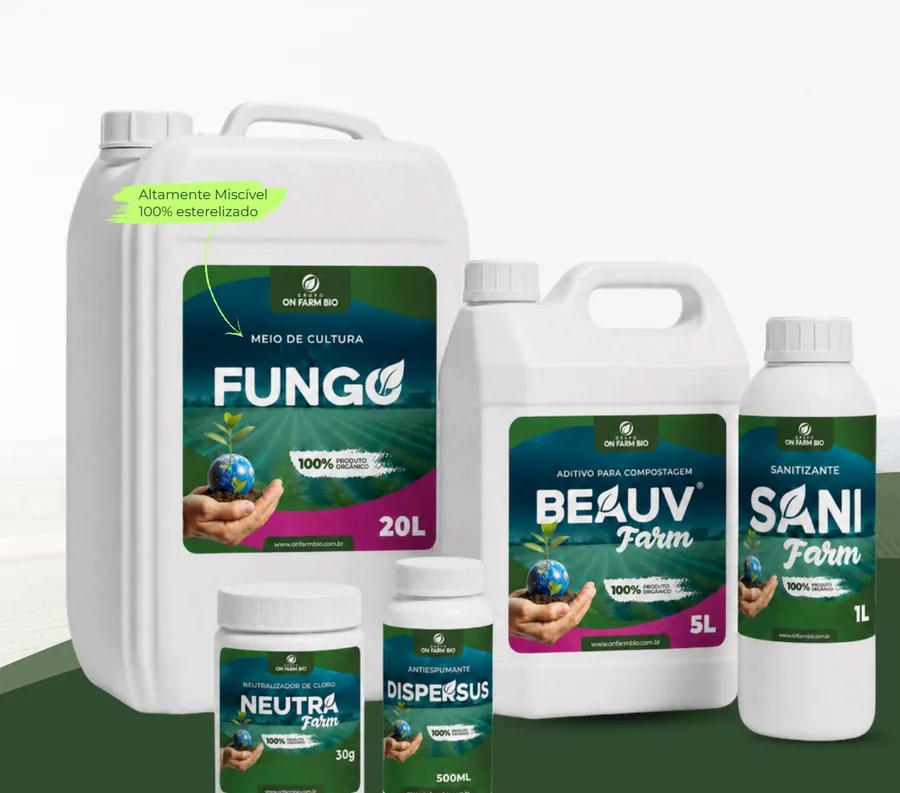
Everything a batch needs. The culture medium varies by microorganism group: Bacillus, fungi, Azos and Brady, or Ch and Sppad.
- Inoculum: the selected strain, 5 L per batch
- Culture medium: food for the microorganism, 20 L
- Elevephfarm: adjusts the water pH
- Neutrafarm: neutralizes chlorine
- Sanifarm: sanitizes the water
- Dispersus: antifoam
Multiplication protocol
Summary of the On Farm Bio protocol manual. Training covers every step using your farm's facilities.
Checklist for every batch
- Chlorine-free water after neutralization
- pH adjusted to the microorganism
- Sanitized equipment and environment
- Inoculum and culture medium of guaranteed quality
- Controlled fermentation temperature and time
- Product stored below 20 °C
Choosing the product by target
Know the target (insect, fungus or weed), its life cycle and habits. Consider specificity, application timing and weather.
Equipment asepsis
The tanks have a rotating spray ball for cleaning between batches.
- Physical cleaning of the walls with a pressure washer.
- Sanitization with 200 L of water and 2 L of household bleach, with circulation and spray ball running.
- Rinse with 200 L of clean water and the spray ball for 20 minutes.
Water treatment
- Fill the tank up to 2,000 L and add 1 L of Sanifarm.
- Circulate through the venturis for 5 minutes.
- Neutralize the chlorine with Neutrafarm, circulate another 5 minutes and confirm with a reagent.
- Measure the pH and correct it with Elevephfarm if needed.
Culture medium
Add the culture medium and circulate for 5 minutes.
Inoculum
Add the inoculum and circulate for the time recommended for the microorganism group.
Antifoam
Add Dispersus to prevent foaming during fermentation.
Fermentation
Aerobic fermentation for 48 to 72 hours, with controlled temperature and pH.
Sampling for analysis
A sample of the batch for microbiological and physicochemical analysis, where applicable.
Storage
In a clean, refrigerated IBC tote, below 20 °C.
Field application
According to the technical recommendation for the crop and the target.
Microorganism by microorganism
The 22 kits and the ready-to-use products that contain the same microorganism.
| Microorganism | On Farm Kit | Found in ready-to-use products |
|---|---|---|
| Bacillus amyloliquefaciens | Kit Amylofarm | Blend Bac, Blend Fung |
| Azospirillum brasilense | Kit Azosfarm | Blend Zea |
| Bacillus aryabhattai | Kit Arybat | Blend Zea, Blend Bac |
| Bradyrhizobium sp. | Kit Bradyfarm | NoduleFarm Vigna, NoduleFarm Soja |
| Bacillus thuringiensis var. kurstaki | Kit Btfarm | Blend Sect |
| Chromobacterium violaceum | Kit Chfarm | Blend Bug |
| Isaria fumosorosea | Kit Isarifarm | Kit only |
| Bacillus megaterium | Kit Megat | Blend Bac, Blend Phos |
| Metarhizium anisopliae | Kit Methafarm | Daubkill, Blend Bug, Blend Sect, Blend Insect |
| Beauveria bassiana | Kit Beauvfarm | Daubkill, Beauv Flay, Blend Insect |
| Paecilomyces lilacinus | Kit Paecifarm | Blend Nema |
| Pochonia chlamydosporia | Kit Pochfarm | Blend Nema |
| Pseudomonas fluorescens | Kit Pseufarm | Blend Zea |
| Bacillus pumilus | Kit Pumicompost | Blend Fung |
| Saccharopolyspora spinosa | Kit Sppad | Blend Sect |
| Bacillus subtilis | Kit Subfarm | Blend Bac, Blend Fung, Blend Phos |
| Trichoderma spp. | Kit Trichofarm | Blend Nema, Multitricho |
| Bacillus velezensis | Kit Velezfarm | Kit only |
| Bacillus methylotrophicus | Kit Methylofarm | Kit only |
| Methylobacterium symbioticum | Kit Methylosym | Kit only |
| Rhizobium tropici | Kit Rhizofarm | NoduleFarm Phaseolus |
| Bacillus licheniformis | Kit Lichenifarm | Kit only |
Frequently asked questions
How much does a kit yield?
A kit yields 1,000 L of preparation. At the reference rate of 2 L/ha, it covers about 500 ha per application. The technical team adjusts the rate for each target.
How long does it take for the biological to be ready?
Fermentation takes 48 to 72 hours, depending on the microorganism. The batch then goes for analysis and into refrigerated storage.
Do I need a laboratory on the farm?
No. The protocol calls for a sample from each batch to be sent for analysis. The On Farm Bio team will advise you on where and how to do it.
What are the pH, temperature and time parameters for each microorganism?
They vary by group (bacteria, fungi, Bacillus) and are provided by the technical team during training, together with the farm's protocol.
Is on-farm production regulated?
Yes. The legal framework for biological inputs (Law 15.070/2024) covers production for on-farm use. The team will advise you on what the farm needs to keep up to date.
How do I store the biological I produce?
In a clean, refrigerated IBC tote, below 20 °C, and apply it according to the technical recommendation.
Design your farm's project
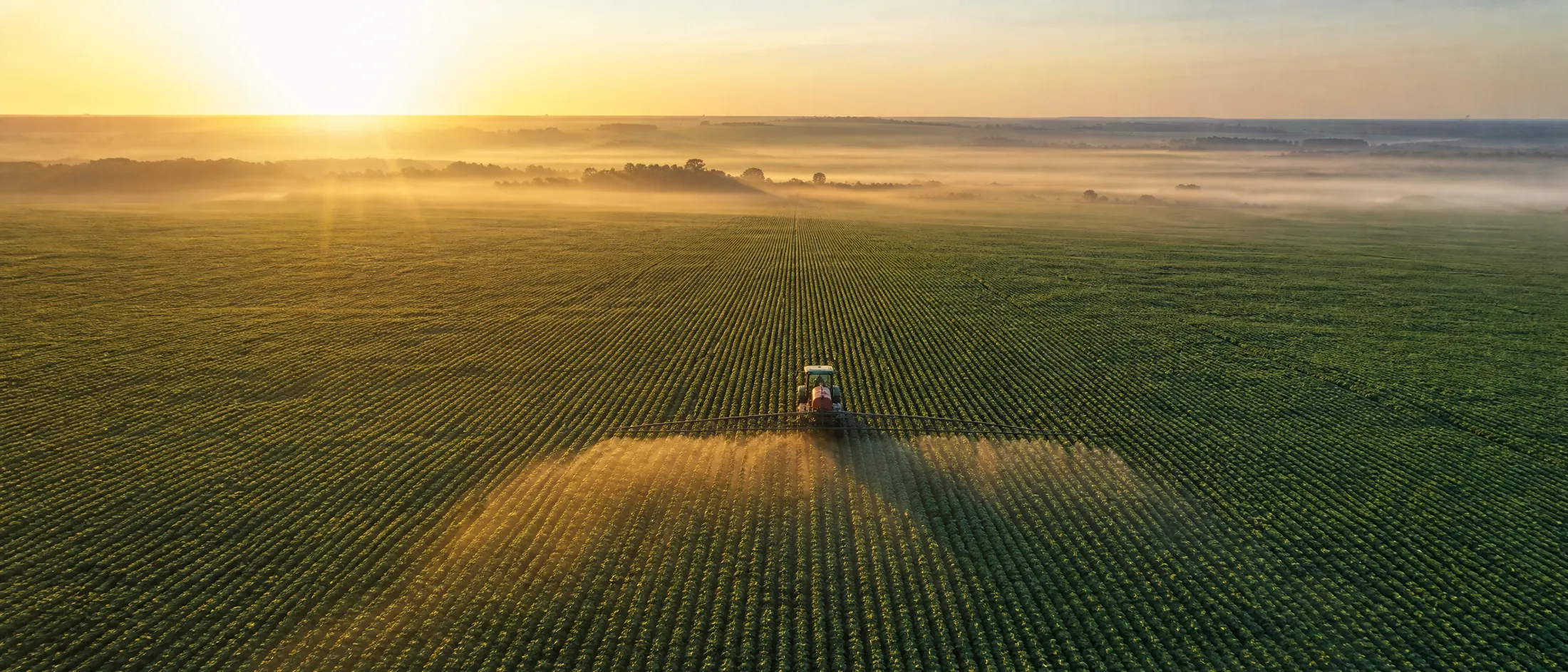
The team sizes the bioreactor based on your area and the season's targets and shows, product by product, where on-farm production pays off.