Green-belly stink bug in second-crop corn: when losses begin and how to act
The attack happens in the first days of the crop, hidden in the soybean straw. Learn how to recognize the damage, monitor and decide when to step in.
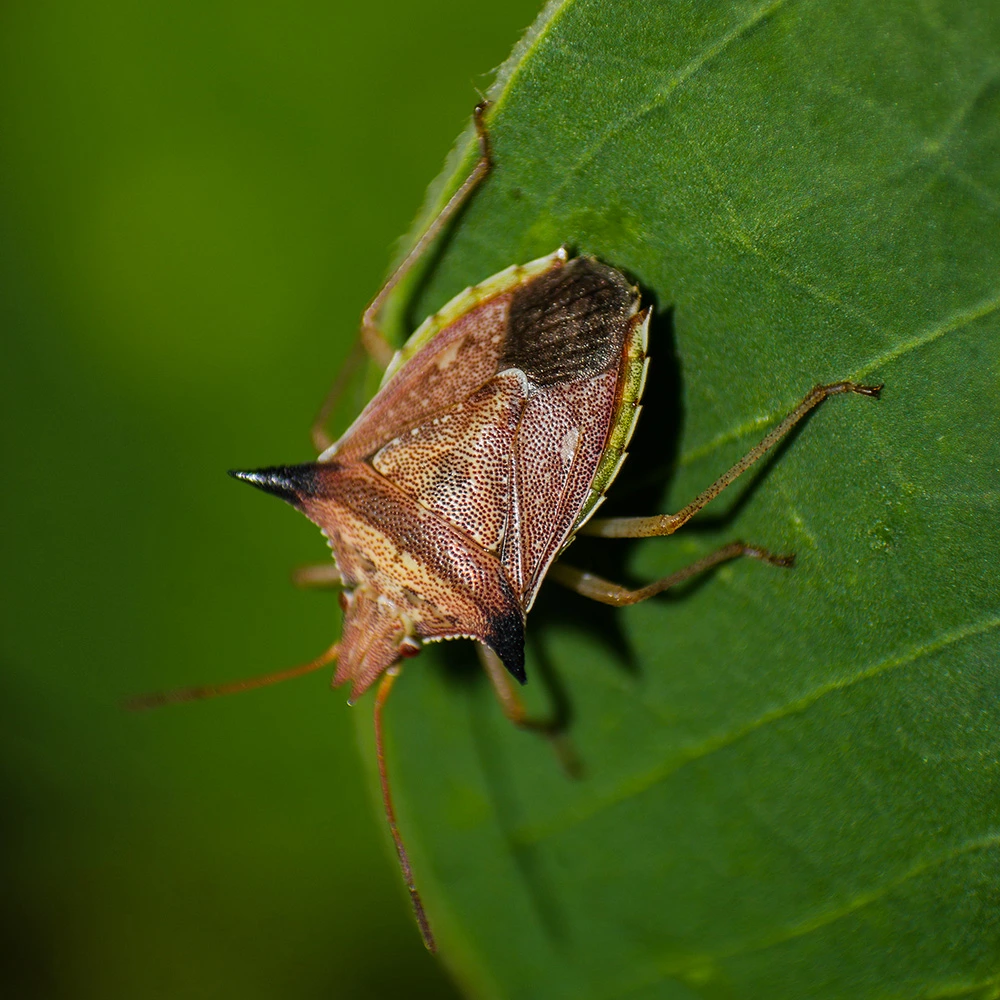
Anyone who plants corn right after soybeans knows the problem: the crop emerges looking good and, within a few days, plants appear with perforated, rolled or tillered leaves. Most of the time, the culprit is the green-belly stink bug, an insect that spends the off-season hidden in the straw and attacks precisely at the stage when corn suffers most.
Why second-crop corn is the target
The green-belly stink bug (formerly called Dichelops melacanthus and D. furcatus, now classified in the genus Diceraeus) feeds on soybeans at the end of the cycle and shelters in the straw after harvest. When corn is planted next, the insects are already there, waiting for the seedlings to emerge.
According to Embrapa, corn is sensitive to attack up to about the five-leaf stage. It is a short window, and the damage done during it cannot be undone.
How to recognize the damage
The stink bug pierces the base of the young plant's stem and injects toxic saliva. The result appears a few days later:
- leaves with rows of holes, which show up as the leaf unrolls;
- rolled or twisted leaves in the whorl;
- tillered plants, which spend energy on shoots without ears;
- dead plants and stand gaps, which cut yield from the start.
How to monitor
Monitoring has to start before planting. Inspect the straw and the base of the plants in the early morning, when the stink bug is less active and easier to find. Count the insects at several points in the area and calculate the average per square meter.
Research by Embrapa Agropecuária Oeste estimated the economic injury level of the green-belly stink bug in corn at 0.58 stink bugs per m². Technical field materials usually use 0.5 stink bugs per m² (or 1 stink bug per 10 plants) in the early stages as the signal to act. Use these numbers as a reference and decide with your agronomist.
The time to act is right at the start
In second-crop corn, protection should begin right after planting, over the soybean straw, from emergence to the first leaves. Waiting for symptoms to appear means the plant has already been attacked.
What biological management does
Two microorganisms work well together against stink bugs:
- Chromobacterium violaceum: a bacterium that acts on the insect by contact and ingestion;
- Metarhizium anisopliae: a fungus that infects the stink bug on contact, including those sheltering in the straw.
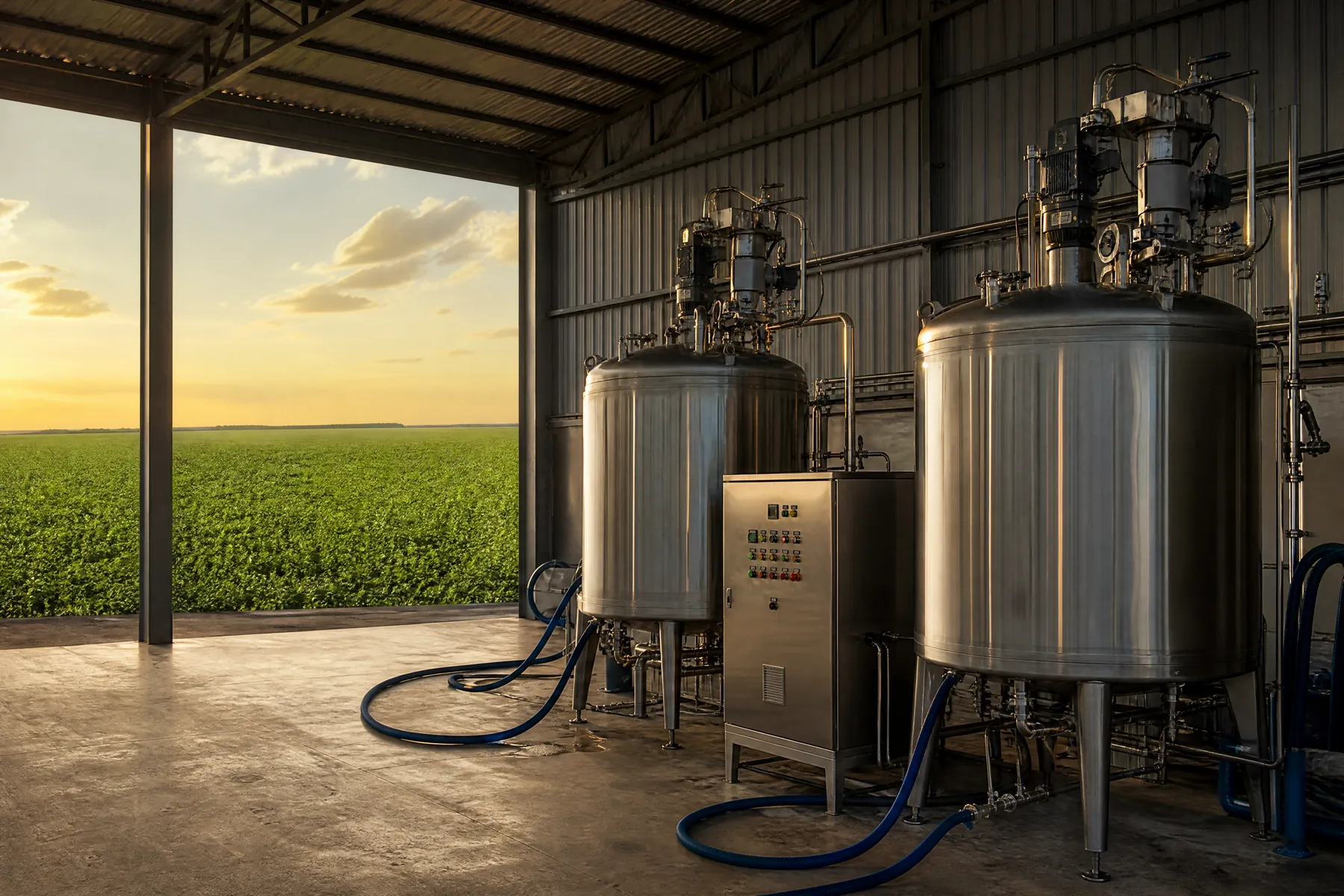
At On Farm Bio, this combination is in Blend Bug. For growers who produce on the farm, the same microorganisms come in the CHFarm and MethaFarm kits. Daubkill and Beauv Flay come in as complements to the program.
Precautions for the biological to work
- Apply during the coolest hours of the day, in the late afternoon or at night, when there is more humidity and less direct sun on the fungus.
- Ensure good coverage of the straw and the base of the plants, which is where the stink bug is.
- Check compatibility before tank-mixing with fungicides or other products.
- Keep monitoring after application to find out whether the population has dropped.
Want to know which product and rate to use on your area? See the green-belly stink bug page or talk to the technical team.
The technical team will recommend the product and management for your case.