Dry bean inoculation: how to ensure active nodules and nitrogen from the air
Dry beans also form nodules and capture nitrogen from the air. To do so, they need the right bacteria, applied the right way and on planting day.
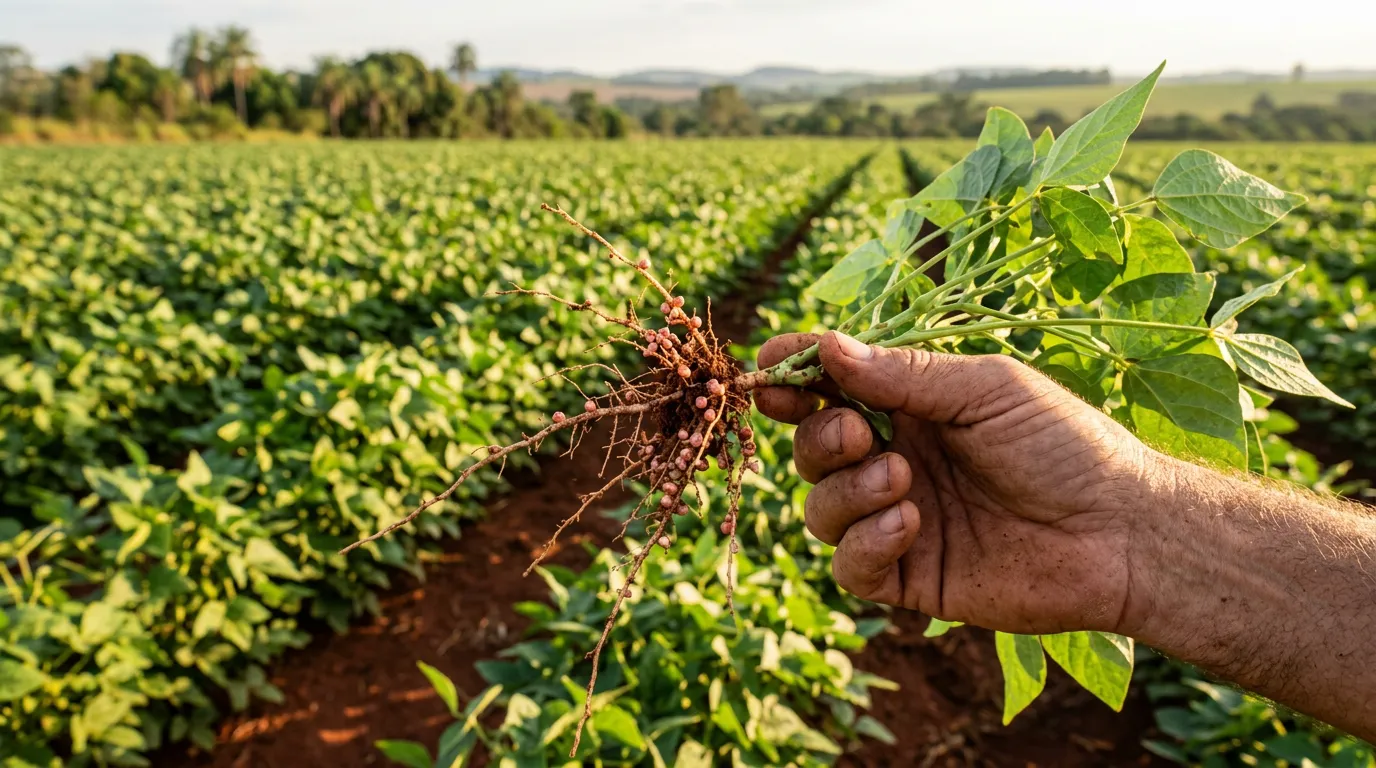
Like soybeans, dry beans partner with bacteria that live in the roots. They form nodules, capture nitrogen from the air and deliver it to the plant. When nodulation fails, the beans turn yellow, grow less and become dependent on nitrogen fertilizer, which is expensive.
Each bean has its own bacterium
The bacterium that works in soybeans does not work for beans. Each type of bean needs its own inoculant:
- Common bean: uses Rhizobium tropici, a bacterium specific to this crop and tolerant of acidic soils and high temperatures;
- Cowpea: uses Bradyrhizobium, adapted to this type of bean.
How to tell whether nodulation is good
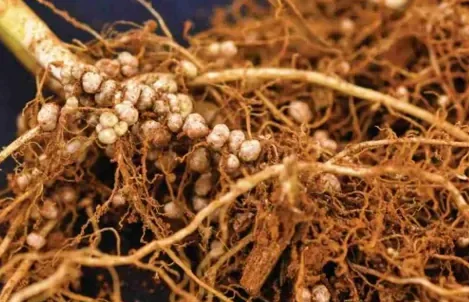
About 30 days after emergence, carefully dig up a few plants, without pulling them by the stem, so the nodules are not left in the soil. Wash the roots and count the nodules. Cut a few in half: an active nodule is pink inside. A white, green or dark nodule is not fixing nitrogen.
Yellowing plants, few nodules on the roots and nodules without the pink color inside. In this case, the crop will depend on mineral nitrogen, at a higher cost and with lower yield.
Application methods
The inoculant can be applied in three ways. See the recommended rates for NoduleFarm Phaseolus:
- On the seed: 210 mL/ha, on planting day;
- In-furrow: 350 to 500 mL/ha;
- Foliar: 500 mL/ha, as a co-inoculation booster.
In cowpea, NoduleFarm Vigna is used at 210 mL/ha on the seed, 250 to 500 mL/ha in the soil and 500 mL/ha to 1 L/ha as a foliar application.
Precautions so the bacteria arrive alive
- Inoculate in the shade and plant on the same day.
- Protect inoculated seed from sun and heat during transport and in the planter.
- Avoid direct contact with seed fungicides and insecticides. If chemical treatment is necessary, apply the inoculant in-furrow instead.
- Use the rate shown on the label.
In practice
NoduleFarm Phaseolus contains two strains of Rhizobium tropici for common bean, and NoduleFarm Vigna contains Bradyrhizobium for cowpea. Both are registered with MAPA. Growers who produce on the farm can multiply Rhizobium tropici with Kit Rhizofarm.
To understand the whole problem, see the page on nodulation and nitrogen fixation.
The technical team will recommend the product and management for your case.