Living soil: how microorganisms release phosphorus and strengthen roots
Part of the fertilizer gets locked up in the soil, and weak roots explore little of it. Beneficial bacteria help the plant make use of what is already in the field.
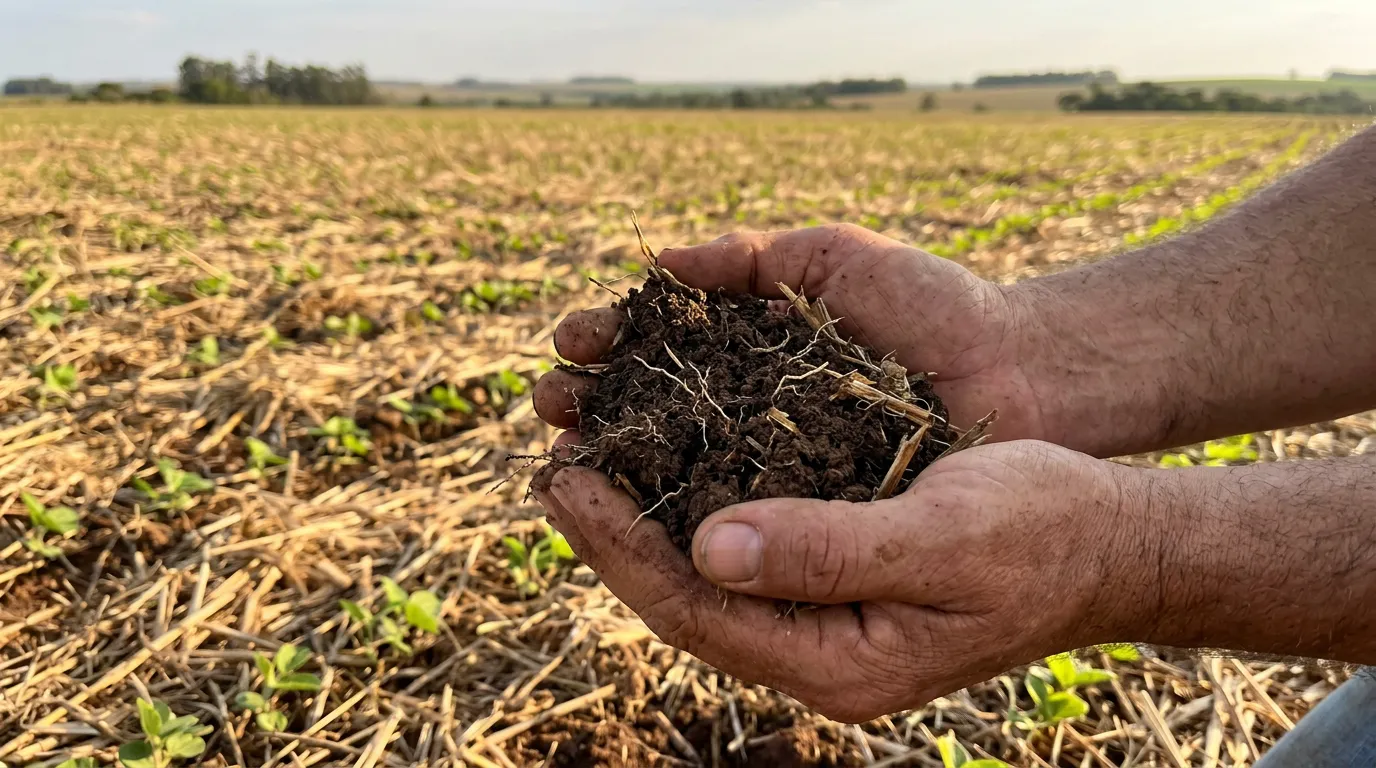
Productive soil does not depend on chemistry alone. It is home to fungi and bacteria that release nutrients, protect roots and help the plant cope with lack of rain. When that life is weak, the grower spends on fertilizer and the plant does not return the investment.
The phosphorus that gets locked up
Much of the phosphorus applied gets bound to soil clays and never reaches the plant. The result is slow development, poor roots and expensive fertilization that delivers little.
The bacteria Bacillus subtilis and B. megaterium release this phosphorus and other bound nutrients. They are in Blend Phos, applied in-furrow together with the base fertilization. Rate: 0.35 to 0.5 L/ha in the soil or 0.1 to 0.15 L/ha on the seed.
Strong roots from the start
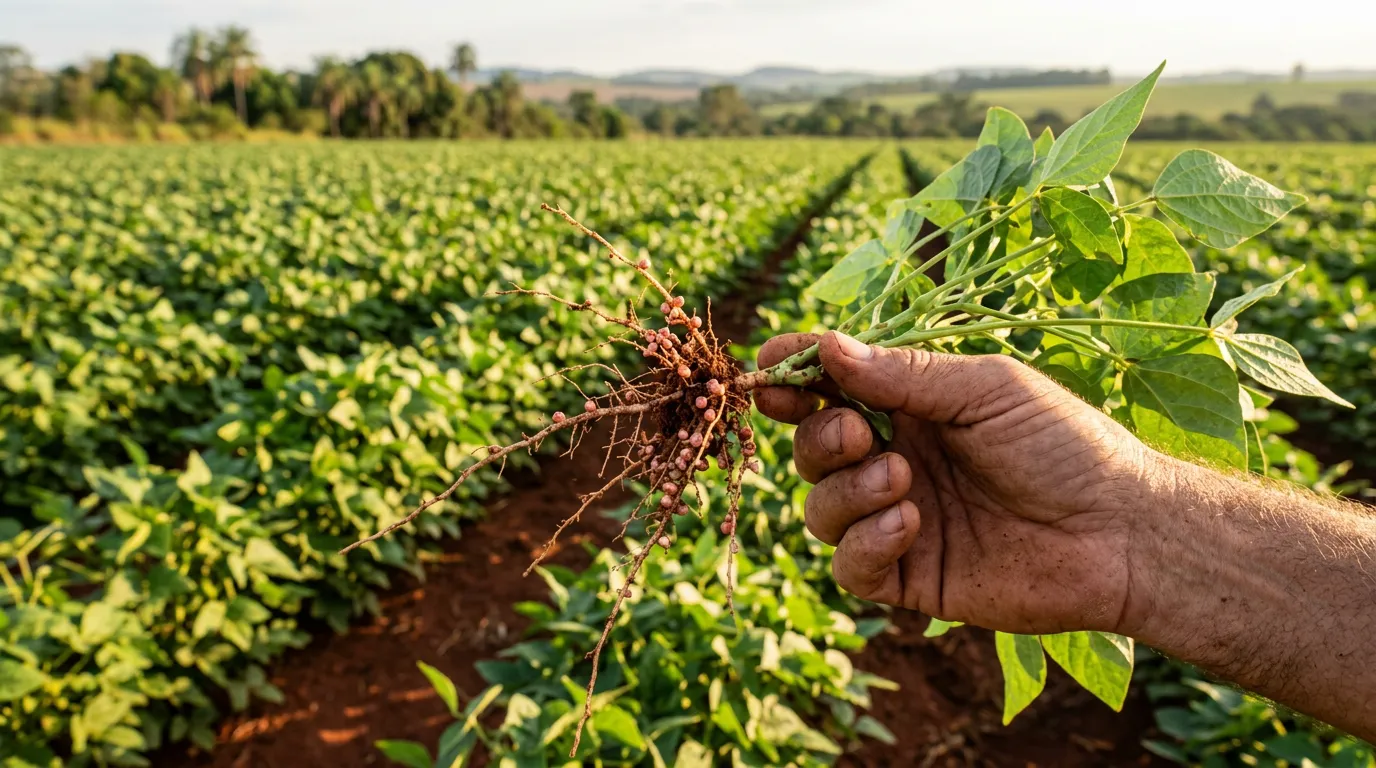
Short roots explore little of the soil, suffer more during dry spells and make poor use of fertilizer. Some bacteria produce phytohormones that make roots grow in volume and depth:
- Azospirillum, Pseudomonas fluorescens and Bacillus aryabhattai, in Blend Zea;
- four species of Bacillus in Blend Bac, which also protect the roots.
Bacillus aryabhattai also helps the plant adapt to water stress. With more roots, the crop reaches water in deeper layers.
How to monitor
- Run soil and leaf analyses to see whether phosphorus is reaching the plant.
- In the first weeks, dig up plants and assess root volume and depth.
- Observe the uniformity of the initial stand.
Soil biologicals go in at planting, on the seed or in-furrow. That is where they establish on the roots and start working from day one.
On the farm
Growers who multiply on farm will find the same microorganisms in the Megat, Arybat, Azosfarm and Pseufarm kits.
See the pages on locked-up phosphorus, weak roots and water stress.
The technical team will recommend the product and management for your case.