Nematodes: how to identify them in the field and manage them with biologicals
Patches of stunted, yellowing plants may be nematodes. Learn how to confirm them, when to apply and which microorganisms act on the roots.
Nematodes are microscopic worms that live in the soil and parasitize roots. You cannot see them with the naked eye, but the damage shows up in the field. And without management, yield drops season after season.
How to recognize them
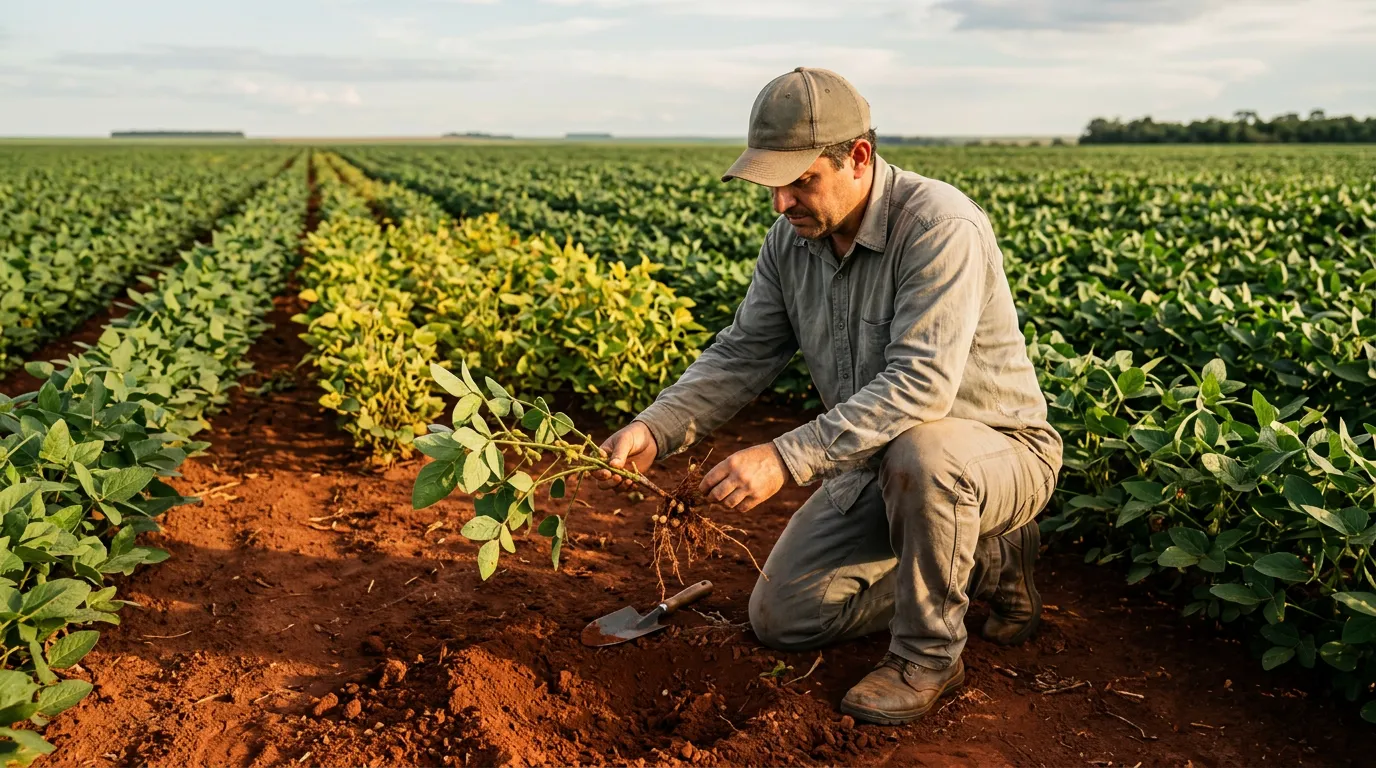
- patches of shorter, yellowing plants in the middle of the field;
- plants that wilt in the hot hours, even with water in the soil;
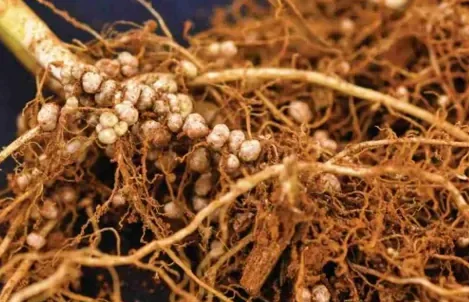
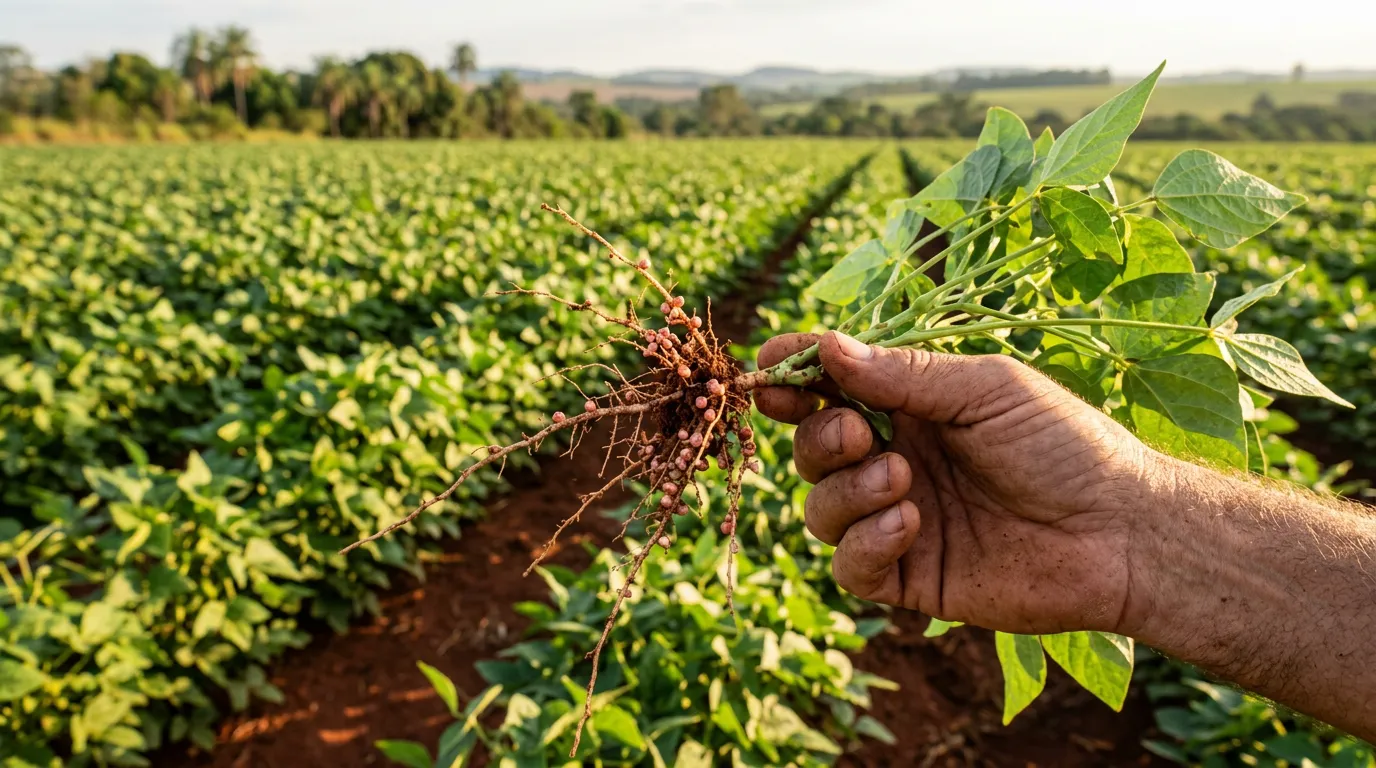
- roots with galls (knots), dark lesions or little volume.
The main groups are root-knot, cyst and Pratylenchus nematodes. All of them make the roots lose their ability to absorb water and nutrients.
Confirm with analysis
The symptoms can be mistaken for nutrient deficiency or compaction. The only way to be sure is a nematode analysis of soil and roots. Collect samples inside and outside the patches and send them to the lab. Mark the patches on the map to track whether they grow or shrink.
When to apply
The biological goes in at planting, in-furrow, to protect the roots from day one. In areas with a history of nematodes, the application should be repeated every season.
What biological management does
- Pochonia chlamydosporia: a fungus that parasitizes nematode eggs and forms structures that survive a long time in the soil;
- Paecilomyces lilacinus: a fungus that destroys eggs and females and forms a barrier on the roots;
- Trichoderma harzianum: protects the root zone and helps against soil fungi.
All three are in Blend Nema, recommended for cyst, root-knot and Pratylenchus nematodes. Blend Bac complements it with Bacillus that form a biological barrier on the roots and stimulate rooting.
Seed: 0.1 to 0.15 L/ha. Soil: 0.35 to 0.5 L/ha. Foliar: 0.5 L/ha. Blend Nema is suitable for soybean, corn, cotton, coffee and dry beans. Adjust the program with your agronomist.
On the farm
For on-farm production, the Pochfarm, Paecifarm, Velezfarm, Subfarm and Trichofarm kits provide the microorganisms that act against nematodes.
See the nematodes page or talk to the technical team.
The technical team will recommend the product and management for your case.